
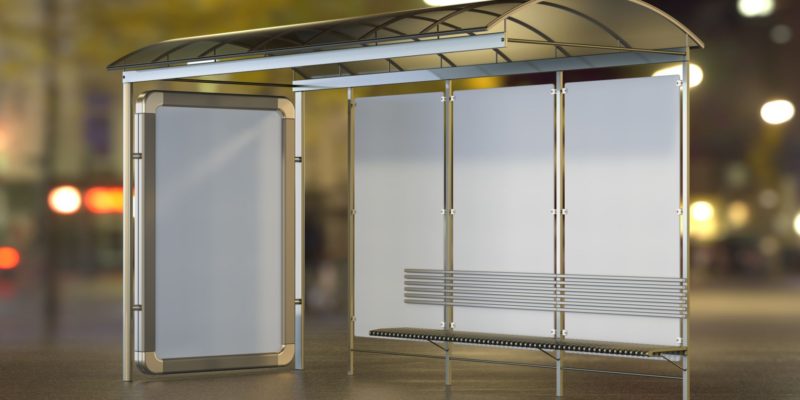
Perhaps you waited at one yourself, or maybe you simply drove or walked past one on your way to work this morning. You might not have given them much thought until now but the humble bus shelter serves a vital purpose and you’ll find them almost everywhere – as of 2019, there were 13,397 bus shelters in London alone.
Here, we explain why bus shelters are so important, delving briefly into their history and looking at some of the most popular modern designs.
Why are bus shelters important?
They keep us safe and dry
The main purpose of a bus shelter is to keep those waiting inside it protected from the elements. Bus shelters also provide a way for tired travellers to rest their legs and, by creating a designated area to stand in, they leave the pavement clear for passing pedestrians.
They keep us informed:
Alongside the traditional route maps and timetables, modern bus shelters often feature RTI or ‘real-time information’ boxes. These scrolling banners give helpful updates and are especially useful at present when many bus services are facing increased disruption due to the COVID-19 pandemic.
They make an impression:
When travelling to a new destination by bus, the bus shelter at the stop where you alight will be one of the first things that you see. Everything about it – the design, cleanliness and upkeep – therefore has the potential to influence your first impression of that place. If you’re responsible for installing a new bus shelter, this is something that you’ll want to consider.
A brief history of the bus shelter
French advertising entrepreneur Jean-Claude Deceaux is often credited with inventing the bus shelter. While it is true that he played a fundamental role in popularising them in the 1960s, they did exist before this time.
In the 17th century, long before the invention of motor vehicles, horse-drawn stagecoaches travelled the same regular routes between UK towns and cities, stopping at a designated place along the way – usually, an inn – so that tired horses could be replaced and passengers could board or alight. As these stagecoaches usually had to be booked in advance, coaching inns at this time can be liked to a form of the early bus stop that also provided weary passengers with a place to eat, drink or sleep. When the railways came along in the 1800s, their stations were built to include canopied shelters and seating, so that those waiting for a train could stay warm and dry. The first UK bus service was established around a similar time and bus stop shelters followed. Many of the oldest remaining bus shelters in Britain are now listed with some of the earliest datings back to the 1920s.
As mentioned earlier, the bus shelter took off in 1960s France thanks to Deveaux. An advertising salesman by trade, Deceaux ran a successful billboard business until new legislation came into place in 1963, restricting roadside advertising. The entrepreneur wasn’t discouraged and came up with an innovative new idea that would benefit public transport users, as well as service operators and clients looking to advertise. Instead of the now restricted billboards, he would place shelters at the side of the road. These would serve a purpose, keeping passengers warm and dry and providing them with seating but wouldn’t cost the transit operators a franc as they would be paid for by advertising.
Across the channel, two British billboard advertising companies, More O’Ferrall and London and Provincial, joined together to embark on a similar venture – supplying free bus shelters to local authorities in exchange for the ability to display advertisements on them – under the company name of Adshel.
You’ll still see the names Adshel and JCDecaux on bus shelters to this day, however, shelter design has moved on somewhat since the 1960s. If you’re looking to install a new bus shelter you’ll want something that is both practical and in keeping with the location in which it will stand. Below, we share some of the most popular modern bus shelter designs with an explanation of their key features and benefits.
What features should I look for in a bus shelter?
Real glass:
When you think of bus shelters, you might remember cloudy plastic windows, often heavily scratched, warped by the weather or vandalised with cigarette burns. At ShelterSolutions, our bus shelters are fitted with 6mm TSG (Toughened Safety Glass) – this is a strong and durable option that is also easy to clean and maintain.
An aluminium frame:
For a long time, bus shelters were manufactured from mild steel, making them prone to rusting and hard to take care of as regular repainting was needed. All shelters from ShelterSolutions instead feature an aluminium frame, which can last upwards of 20 years with no rust and very little maintenance required. We even offer a 15-year guarantee.
A choice of colours:
Don’t let a bright or garishly coloured bus shelter ruin a carefully planned landscape. At ShelterSolutions, many of our shelters can be powder coated to any colour you choose, giving you the freedom to select the right one for your project.
Installation included:
It’s important to be aware that to erect a bus shelter you’ll need a Streetworks Certificate. While some direct sales companies might sell a bus shelter with DIY assembly instructions included, ShelterSolutions will take care of everything including delivery and installation.
Vandal resistant:
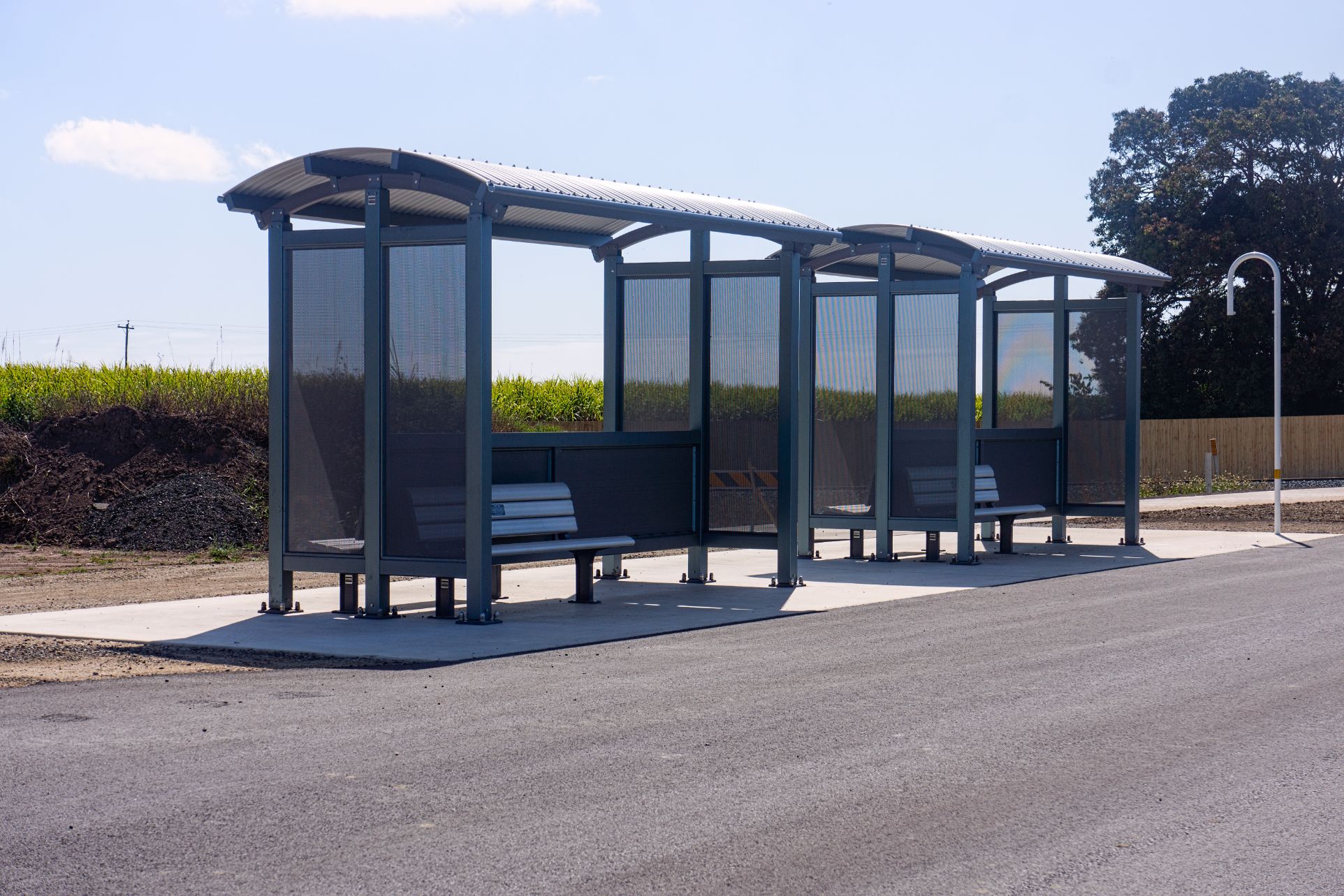
If you’re replacing a bus shelter that has been vandalised or are planning to install one in a location where this is likely, we can offer a solution. Our vandal resistant shelters use perforated aluminium panels in place of glass or polycarbonate as well as aluminium cladding on the roof, making them much harder to intentionally damage.
Future-proof:
As well as RTI boxes, ShelterSolutions can supply bus stop shelters with solar panels. If ordered with the shelter, there won’t even be a cost for fitting.
What are the most popular bus shelter designs on the market today?
Trend shelter:
This popular cosmopolitan design was first used for the Harry Potter studios and features a unique slanted glass roof with a simple glass back and side panel for a sleek and futuristic look.
Suffolk Pitched:
Available in a range of different configurations with a coloured aluminium frame, this cantilever style bus shelter features an attractive pitched roof.
Lancashire Dome:
This elegant modern bus shelter features a domed roof along with attractive wood-effect bench seating. Like the Suffolk Pitched shelter, it features a coloured aluminium frame that can be customised to suit your preferences.
Mersey Flat:
This minimalistic bus shelter design features a flat roof with a simple back and full length perch seat. It can be powder coated to any colour and is available with 6mm TSG Toughened Safety Glass or 4mm Petg Polycarbonate at no extra charge.
RTI:
RTI, or ‘real-time information’, boxes can be added to bus shelters with a range of different roof styles. You can find out more here.
If you’d like to explore our full range of bus shelters, and learn more about other products and services, click here.