
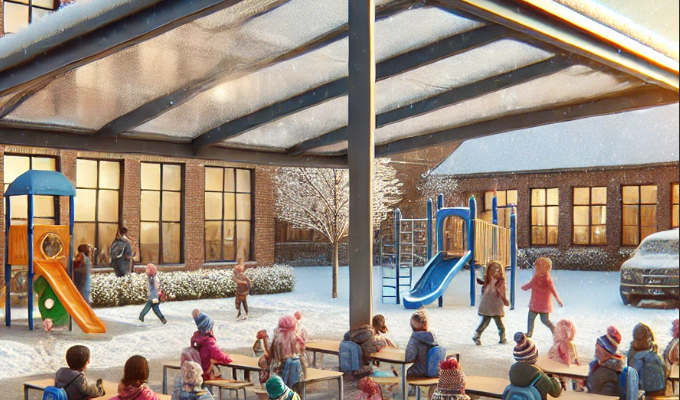
Winter brings unique challenges for schools, with unpredictable weather often disrupting routines and creating safety concerns for students and staff. From heavy rain to icy conditions, the colder months can make it difficult to maintain a safe and comfortable learning environment. Without the right infrastructure, outdoor areas become underutilized, and the increased maintenance demands can strain school resources.
That’s where weather-proof shelters come in. These structures offer a practical solution to winter’s challenges, providing protection from the elements, enhancing outdoor spaces, and supporting a variety of school activities year-round. Whether it’s a sheltered walkway for safe transitions between buildings, a covered playground for uninterrupted playtime, or an outdoor classroom that keeps lessons going regardless of the weather, these shelters are a valuable addition to any school.
In this guide, we’ll explore the critical role weather-proof shelters play during the winter months. From keeping students safe and dry to reducing maintenance costs and ensuring uninterrupted learning, discover why investing in these shelters is essential for your school’s success.
1. Winter Challenges for Schools
Winter presents a unique set of challenges for schools, impacting both students and staff in various ways. Understanding these obstacles highlights the importance of investing in weather-proof solutions.
1.1 Impact on Students and Staff
Discomfort for Students
Cold, wet weather can make outdoor spaces unappealing and uncomfortable for students. Without proper shelter, outdoor breaks turn into unpleasant experiences, and wet clothing can lead to distractions in the classroom. Additionally, exposure to harsh elements may increase the likelihood of illnesses, affecting attendance and overall learning outcomes.
Challenges for Staff
Teachers and staff often face difficulties in maintaining smooth operations during winter. Managing students in wet or icy conditions can be stressful, especially during transitions between classes or when supervising outdoor play. The discomfort of standing in open areas without protection also takes its toll on staff morale.
1.2 Increased Maintenance and Safety Concerns
Slippery Surfaces
Rain and ice create hazardous conditions on walkways, playgrounds, and parking lots, significantly increasing the risk of slips and falls. These incidents not only endanger students, parents, and staff but also expose schools to potential liability concerns.
Higher Cleaning Demands
Mud, water, and debris tracked into school buildings result in more wear and tear on flooring and increased cleaning requirements. This added maintenance places extra strain on janitorial staff and budgets, diverting resources from other essential tasks.
By addressing these challenges with weather-proof shelters, schools can transform their spaces into safer, more functional environments, even during the harshest months of the year.
2. Benefits of Weather-Proof Shelters in Winter
Weather-proof shelters provide numerous advantages for schools during the colder months. By addressing common winter challenges, these structures create safer, more comfortable environments for students and staff while supporting key educational goals.
2.1 Keeping Students Safe and Dry
Enhanced Protection
Weather-proof shelters ensure students remain shielded from rain, wind, and snow during outdoor activities. Whether they’re waiting for a ride home or transitioning between classes, these structures reduce exposure to the elements, keeping students dry and minimizing the risk of colds and flu.
Safety in Hazardous Conditions
Shelters placed over walkways or near entrances help prevent accidents caused by icy or wet surfaces. With covered areas, students and staff have safe, secure zones to navigate, even in challenging weather conditions.
2.2 Enhancing Outdoor Learning Opportunities
Year-Round Outdoor Classrooms
Weather-proof shelters open up opportunities for outdoor learning, even during winter. These spaces encourage students to engage with nature, breathe fresh air, and participate in creative or hands-on activities without being hindered by poor weather.
Physical Activity and Play
Maintaining outdoor playtime is crucial for students’ physical and mental wellbeing. Covered playgrounds ensure children can enjoy recess and other outdoor activities, regardless of the weather, promoting health and reducing cabin fever during the colder months.
2.3 Reducing Maintenance and Operational Costs
Protecting School Grounds
Shelters minimize the amount of rain, mud, and snow brought into buildings, reducing the strain on flooring and cleaning schedules. This translates to lower maintenance costs and longer-lasting infrastructure.
Prolonged Equipment Lifespan
By protecting outdoor furniture, sports equipment, and other facilities from exposure to the elements, shelters prevent wear and tear, ensuring these investments last longer.
Investing in weather-proof shelters allows schools to overcome winter’s challenges while enhancing the overall learning environment, safety, and functionality of their outdoor spaces. These benefits make shelters a valuable asset during the colder months and beyond.
3. Features of Effective Weather-Proof Shelters
Not all shelters are created equal, and choosing the right features is essential to ensure maximum functionality and durability during the winter months. Here’s what makes an effective weather-proof shelter for schools.
3.1 Durable Materials for All Weather Conditions
Aluminium Framework
Shelters constructed with rust-resistant aluminium provide unmatched durability. Unlike steel, which can corrode over time, aluminium withstands exposure to rain, snow, and humidity without deteriorating. This ensures a long-lasting solution that requires minimal maintenance.
Weather-Resistant Roofing
High-quality polycarbonate or toughened safety glass roofs are ideal for shelters in schools. These materials resist UV damage, reduce glare, and maintain their clarity over time. Additionally, they are designed to withstand the weight of snow and protect against heavy rainfall.
3.2 Protective Design Elements
Seamless Construction
Minimized seams and reinforced joins prevent water leaks and drafts, keeping the interior of the shelter dry and comfortable. This design also improves the shelter’s ability to withstand strong winds.
Elevated Bases
Shelters with slightly raised bases reduce the risk of water pooling at the foundation, which can compromise stability over time. This feature also protects flooring and ensures long-term structural integrity.
Integrated Drainage Systems
Built-in drainage channels direct water away from the shelter, preventing leaks and reducing water-related wear and tear. These systems are especially useful for shelters located in areas with frequent rainfall or snowmelt.
3.3 Customization Options for Schools
Enclosed or Open Designs
Depending on the intended use, schools can choose from open-sided shelters for playgrounds or partially enclosed designs to block wind and rain while maintaining airflow.
Built-In Features
Shelters can include functional additions like benches, hooks for coats or bags, and integrated lighting. These options enhance the utility of the structure, making it more student-friendly and practical for year-round use.
Investing in shelters with these features ensures schools are well-prepared for winter while enjoying long-term benefits like durability, safety, and functionality. By selecting robust materials and smart designs, schools can create spaces that withstand the elements and serve students effectively.
4. Strategic Placement of Weather-Proof Shelters
The location of weather-proof shelters is just as important as their design. Thoughtful placement ensures maximum functionality, convenience, and safety for students and staff during the winter months.
4.1 Key Areas for Installation
Walkways Between Buildings
Covered walkways provide safe, dry routes for students and staff transitioning between classrooms, gyms, or administrative offices. By preventing exposure to rain, snow, or icy surfaces, these shelters reduce slips and falls while maintaining a seamless flow of movement across the campus.
Playgrounds and Outdoor Areas
Playgrounds often go unused during winter due to harsh weather. Installing weather-proof shelters over play areas keeps children protected, allowing them to enjoy fresh air and physical activity year-round. This improves their well-being and keeps the school day dynamic.
Drop-Off and Pick-Up Zones
Shelters near entrances or pick-up zones shield students and parents from the elements as they wait for rides. This improves the overall experience for families and ensures children stay safe and comfortable during busy transition times.
Sports Facilities and Equipment Storage
Outdoor sports facilities or areas where equipment is stored can benefit from weather-proof shelters. These structures keep equipment dry and safe, extending its lifespan while allowing sports activities to continue even in adverse weather.
4.2 Considering School-Specific Needs
Student Traffic Patterns
Analyse the flow of students across the campus to determine high-traffic areas that would benefit most from shelters. Strategic placement ensures maximum impact, reducing bottlenecks and improving safety.
Space Utilization
Some schools may have limited outdoor space, making multi-purpose shelters an ideal solution. For example, a shelter placed over a walkway can double as a waiting area during busy periods, optimizing its use.
Accessibility and Inclusivity
Ensure that shelters are accessible to all students, including those with mobility challenges. Wide entrances, flat bases, and thoughtful design make the shelters usable for everyone, reinforcing the school’s commitment to inclusivity.
4.3 Long-Term Benefits of Strategic Placement
Thoughtful placement of weather-proof shelters not only addresses immediate winter concerns but also enhances the overall functionality of the school environment. By investing in shelters in the right areas, schools can create a more organized, safe, and efficient campus for both students and staff.
With strategic placement, shelters can support daily operations, outdoor activities, and long-term infrastructure goals, making them a vital part of winter preparation.
5. Maintenance Tips for Weather-Proof Shelters in Winter
To ensure weather-proof shelters remain effective and durable throughout the winter months, regular maintenance is essential. Proper upkeep not only extends the life of the structure but also ensures it continues to provide a safe and functional environment for students and staff.
5.1 Routine Cleaning and Inspection
Clear Debris Regularly
Leaves, snow, and other debris can accumulate on shelter roofs and drainage systems, potentially causing blockages or structural strain. Schedule regular cleaning to remove these obstructions and maintain optimal performance.
Inspect for Damage
Check for any cracks, loose fasteners, or signs of wear on the shelter’s structure and roofing. Early detection of issues can prevent minor damage from becoming a costly repair.
Glazing Maintenance
For shelters with polycarbonate or glass panels, clean the surfaces with warm, soapy water to maintain visibility and aesthetics. Avoid abrasive materials to prevent scratches.
5.2 Snow and Ice Management
Clear Snow Accumulation
Heavy snow can put stress on the shelter’s roof. Use a soft brush or snow rake to gently remove snow, taking care not to damage the roofing material.
Prevent Ice Buildup
Ice can form on the roof and drip onto walkways, creating hazards. Ensure drainage systems are clear and functioning to prevent water from pooling and freezing around the shelter.
5.3 Addressing Wear and Tear
Check Protective Coatings
Inspect the powder coating or protective finish on the shelter’s framework. If you notice any chips or scratches, touch them up promptly to prevent further wear.
Tighten Fasteners
Ensure all bolts, screws, and fasteners remain secure. Harsh winter conditions can loosen fittings, compromising the shelter’s stability.
5.4 Preparing for Heavy Weather
Reinforce Anchoring
Check that the shelter’s anchoring systems are secure, especially in areas prone to strong winds. Reinforce as needed to ensure the structure remains stable during storms.
Winterize Accessories
If your shelter includes lighting or other electronic accessories, check that these systems are properly weatherproofed and functioning to avoid disruptions during colder months.
5.5 Create a Maintenance Schedule
Seasonal Checks
Develop a winter maintenance schedule that includes monthly inspections, snow removal, and minor repairs. Consistent upkeep prevents long-term damage and ensures the shelter remains in top condition.
Allocate Resources
Plan ahead by allocating budget and resources for shelter maintenance. This minimizes unexpected costs and ensures maintenance tasks are completed efficiently.
By following these maintenance tips, schools can ensure their weather-proof shelters continue to provide reliable protection and functionality throughout the winter. A well-maintained shelter not only enhances safety but also demonstrates the school’s commitment to providing a secure and welcoming environment for students and staff.
6. Investing in the Right Weather-Proof Shelter for Your School
Selecting the appropriate weather-proof shelter is critical to meeting your school’s unique needs during the winter months. By considering your school’s specific requirements, budget, and goals, you can make a long-term investment that benefits students, staff, and the overall campus environment.
6.1 Evaluating Your School’s Needs
Assess High-Traffic Areas
Identify areas on your school grounds where students and staff are most exposed to the elements. These could include walkways between buildings, drop-off zones, or playgrounds. Prioritize these spaces when planning shelter installations.
Determine Usage
Consider how the shelter will be used. Is it for students waiting for transportation, outdoor learning, or protecting playground equipment? Defining its primary purpose will help you choose the right design and features.
Plan for Growth
Think long-term when investing in shelters. If your school is expecting an increase in enrollment or expanding facilities, select scalable solutions that can accommodate future needs.
6.2 Key Features to Look For
Weather-Resistant Materials
Choose shelters constructed from durable materials like aluminium, which is rust-resistant and requires minimal maintenance. Reinforced glazing options, such as Toughened Safety Glass (TSG) or polycarbonate, provide added protection.
Customizable Options
Every school is unique, so opt for shelters that can be tailored to your requirements. Features like integrated seating, lighting, or enclosed designs can enhance usability and comfort during winter.
Eco-Friendly Solutions
Look for shelters that incorporate sustainable features, such as solar panels for lighting. This not only reduces energy costs but also aligns with environmentally conscious goals.
6.3 Working with Trusted Providers
Experience in School Projects
Partner with a provider experienced in working with schools. A trusted manufacturer like Shelter Solutions understands the specific challenges of educational environments and offers tailored solutions to meet those needs.
Free Consultations and Site Surveys
Choose a provider that offers complimentary site surveys and consultations. This ensures the shelter design is optimized for your space and climate.
Long-Term Guarantees
Invest in shelters backed by warranties, such as Shelter Solutions’ 15-year rust-free guarantee. This gives you peace of mind and ensures the structure remains reliable over time.
6.4 Budgeting for Value
Cost-Effectiveness
While upfront costs are important, focus on the long-term value of the shelter. Durable, low-maintenance shelters may cost more initially but save money on repairs and replacements over time.
Funding Opportunities
Explore potential funding options, such as government grants or PTA contributions, to support the purchase of weather-proof shelters. Highlighting the safety and educational benefits of the investment can help secure financial backing.
Investing in the right weather-proof shelter not only prepares your school for winter but also enhances the campus year-round. By evaluating your needs, choosing durable and customizable designs, and working with experienced providers, you can ensure a solution that supports your school’s mission while creating a safer and more comfortable environment for everyone.
7. Conclusion: Ensuring Winter-Ready Schools with Weather-Proof Shelters
As winter approaches, preparing your school for the challenges of colder weather becomes a top priority. Weather-proof shelters play a vital role in creating a safe, comfortable, and functional environment for students, staff, and visitors during the season’s harshest months. From protecting against rain, snow, and wind to enhancing accessibility and safety, these structures are indispensable for maintaining a seamless school day.
Key Takeaways:
- Weather-Proof Shelters Enhance Safety:
Reduce slips, trips, and exposure to the elements by installing shelters in high-traffic and vulnerable areas like walkways, playgrounds, and pick-up zones. - Customizable Solutions for Every School:
Choose designs tailored to your campus needs, including roofing styles, materials, and functional features like lighting or enclosed spaces. - Low-Maintenance Durability:
Invest in shelters made from weather-resistant materials like aluminium, reinforced with protective coatings for long-lasting performance and minimal upkeep. - Strategic Placement is Key:
Thoughtfully positioned shelters maximize their utility and ensure they support student flow, outdoor activities, and operational efficiency. - Work with Experienced Providers:
Partnering with a trusted manufacturer like Shelter Solutions ensures high-quality products, expert installation, and long-term value backed by guarantees.
The Long-Term Impact of Weather-Proof Shelters
Beyond winter preparation, these shelters provide year-round benefits, fostering outdoor learning, extending the usability of school facilities, and showcasing a commitment to student safety and well-being. Their durability and adaptability make them a worthwhile investment, addressing current challenges while meeting future needs.
Equip your school with the tools to thrive during winter and beyond by incorporating weather-proof shelters into your campus infrastructure. For expert advice, customizable designs, and professional installation, contact us today to explore the best options for your school’s unique requirements. Let’s work together to create a safer, more resilient learning environment for every season.